machine learning play in an exchange for AI agents
Machine learning plays a pivotal role in an exchange for AI agents by enabling these agents to continuously learn, adapt, and improve their interactions and decision-making processes. An exchange for AI agents is a dynamic environment where multiple autonomous AI entities communicate, collaborate, or compete to achieve specific goals. Machine learning empowers these agents to analyze vast amounts of data generated within the exchange, extract meaningful patterns, and optimize their strategies in real time, ultimately enhancing the overall efficiency and intelligence of the system.
In an exchange for AI agents, machine learning algorithms allow each agent to better understand the environment and the behaviors of other agents. Through techniques such as reinforcement learning, agents can learn optimal actions by receiving feedback from their interactions within the exchange. This feedback loop enables the agents to improve their performance iteratively without explicit programming for every possible scenario. For instance, in a trading exchange where AI agents represent buyers and sellers, machine learning helps agents predict market trends, adjust their bids or offers, and respond strategically to maximize profits.
Moreover, machine learning enables AI agents to handle uncertainty and incomplete information effectively. Exchanges for AI agents often operate in complex, noisy, or partially observable environments, where agents must make decisions with limited data. By leveraging supervised or unsupervised learning methods, agents can generalize from past experiences and infer missing information, making their responses more robust and intelligent. This capacity is crucial in situations such as multi-agent coordination or negotiation, where understanding the intentions and likely actions of other agents can lead to better collaboration or competitive advantage.
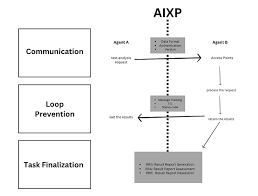
What role does machine learning play in an exchange for AI agents?
Another essential role of machine learning in an exchange for AI agents is personalization and customization. Each agent may have distinct objectives, preferences, or constraints, and machine learning algorithms help tailor behaviors accordingly. For example, in a platform where AI agents assist different users or industries, machine learning models can be trained on specific datasets to customize agents’ responses and actions. This adaptability ensures that the exchange remains flexible and relevant to diverse use cases while maintaining seamless interoperability among agents.
Machine learning also facilitates anomaly detection and security within an exchange for AI agents. Since these exchanges involve multiple agents interacting continuously, identifying unusual behaviors or potential threats is vital. Machine learning models can monitor patterns of communication and detect deviations that may indicate faults, attacks, or malfunctions. Early detection through machine learning helps maintain the integrity and reliability of the exchange, preventing disruptions and ensuring trust among participants.
Furthermore, machine learning contributes to optimizing resource allocation and efficiency in an exchange for AI agents. By analyzing historical data and predicting workload patterns, machine learning can inform dynamic scheduling, load balancing, and energy consumption management. This optimization not only improves the responsiveness of the exchange but also reduces operational costs, making AI-driven systems more sustainable and scalable.
In conclusion, machine learning serves as a fundamental enabler in an exchange for AI agents by providing the tools necessary for learning, adaptation, prediction, personalization, security, and optimization. It transforms static, rule-based AI agents into intelligent entities capable of evolving within complex, interactive environments. As the sophistication and prevalence of AI exchanges grow, the role of machine learning will continue to expand, driving more advanced, efficient, and autonomous systems that can better meet the demands of diverse applications.